


Most of the flammable part, gone
A hybrid solid–liquid cell: the liquid electrolyte is largely replaced by a solid one, cured inside the finished cell rather than pressed against it. Built on the same lines as a conventional cell — and it behaves very differently when something goes wrong.
A ladder, not a switch
Solid-state is not one thing. What matters commercially is how much liquid electrolyte is left in the cell — and whether the result can still be made on equipment that exists today.
Cured inside the cell
The electrolyte goes in as a liquid precursor and is solidified in situ, after the cell is assembled. The solid phase therefore forms in contact with the electrodes instead of being pressed onto them — which is the interface problem that holds most solid-state designs back.
Six things make it work
In-situ solidification; solid electrolyte blended into the electrode; solid-electrolyte-coated cathode particles; a solid-electrolyte-coated separator; ultra-thin lithium metal; and high-precision anode pre-lithiation.
Made on today's lines
Because the route is compatible with existing cell processes and equipment, this is not a pilot quantity. It ships in volume for aviation-adjacent light powertrains, road vehicles and grid storage — and, since 2024, for ships.
The same tests, side by side
A 280 Ah semi-solid cell against a conventional liquid 280 Ah cell, under the abuse tests the standards actually specify. These are the cell manufacturer's qualification results.
Pack, string, container
One cell, three levels of assembly. Prismatic LFP, 280 Ah, liquid-cooled from the base of the enclosure in every case.
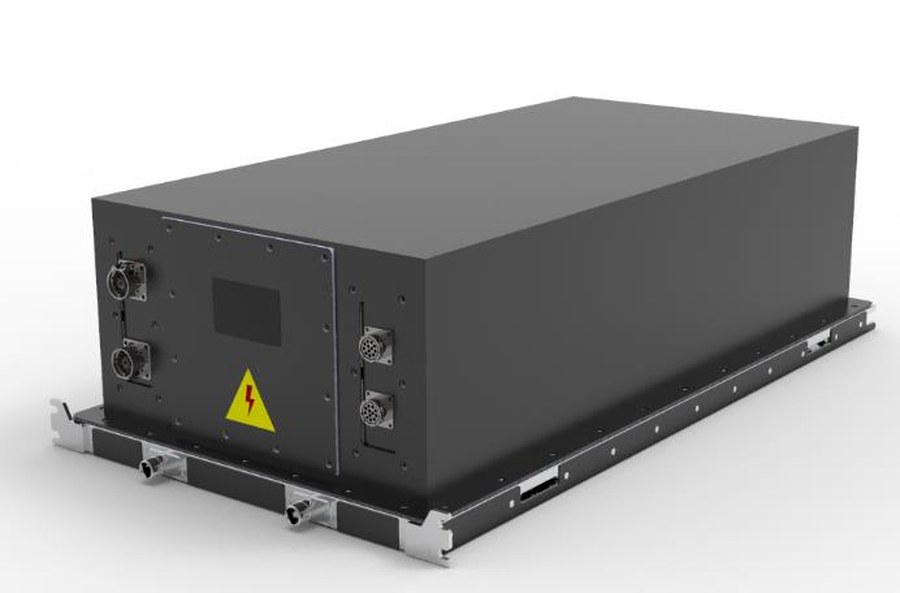
Battery pack — 1P18S
The building block: 16 kWh at 57.6 V, sealed to IP67 and under 130 kg, so it can be carried through a hatch and bolted into a rack.
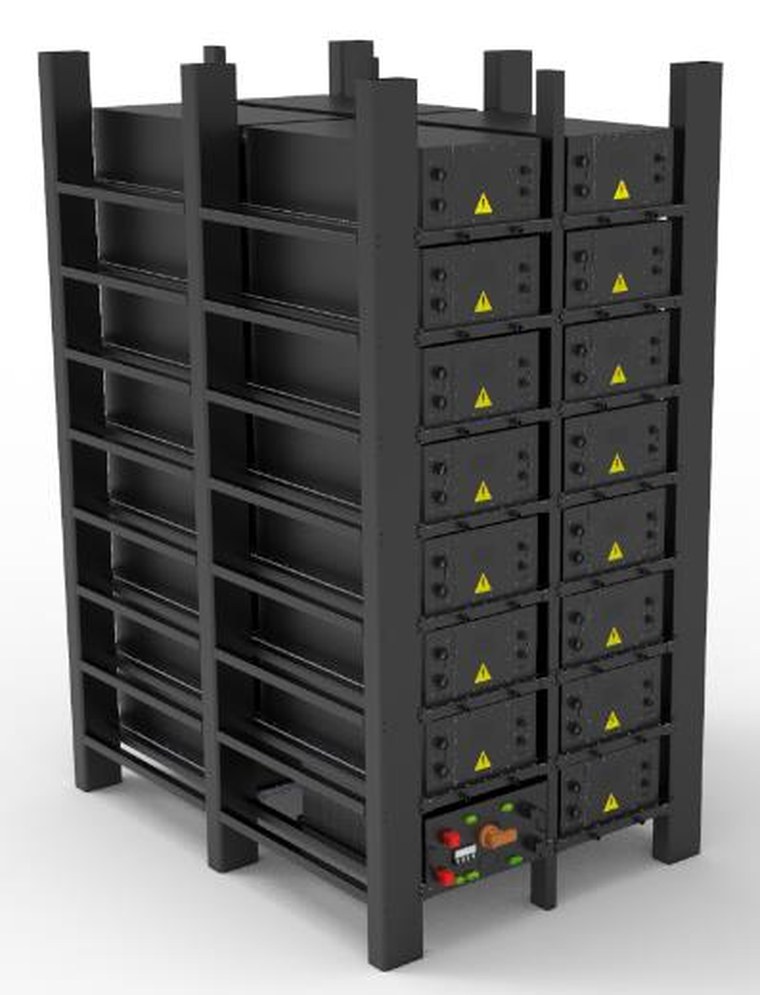
Battery string — 1P270S
Packs stacked into one 864 V string of 242 kWh — the unit a naval architect actually plans around, because it is the unit that can be lost without losing the ship.
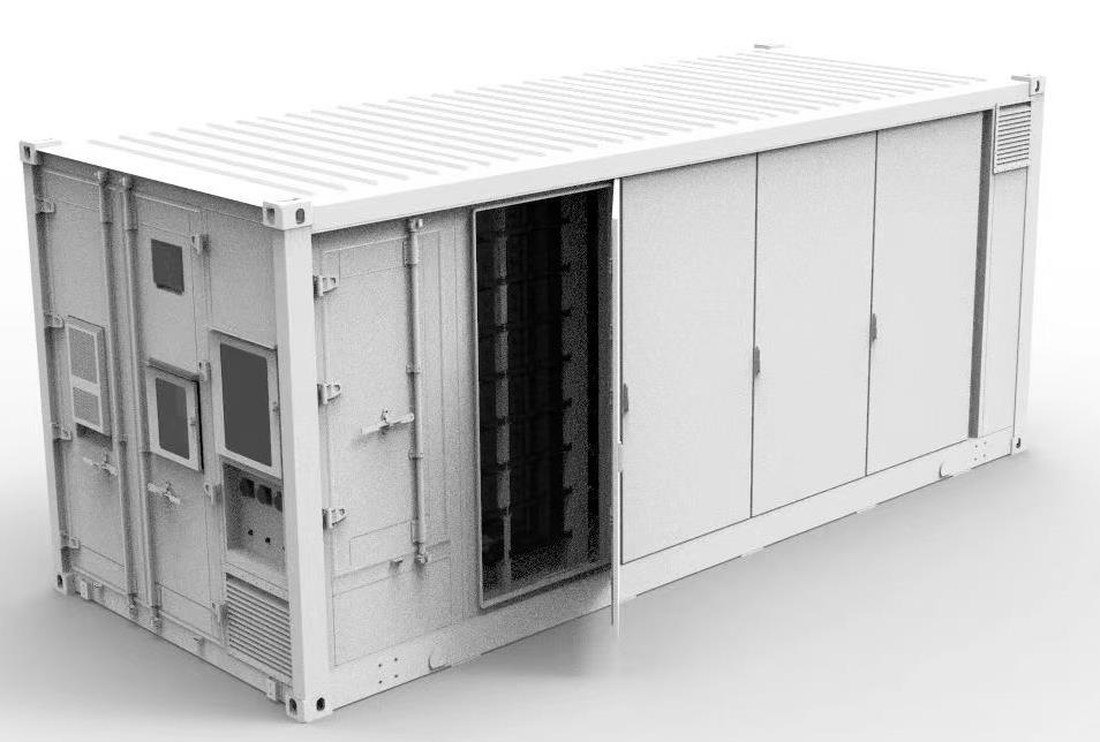
Containerised power — 20 ft
1.9 MWh in a standard box: 120 packs in eight strings, A60 fire rating, four hours of UPS backup. For ferries and workboats it is the propulsion battery; on shore it is the charging buffer that lets a quay take the load without a new grid connection.
Full electrical specifications, single-line diagrams and class documentation on request.
Five decisions taken for the ship, not the datasheet
The safe cell first
A long-life hybrid solid–liquid cell is the foundation. Everything above it is easier because of what the cell does not do.
Every cell has its own sensor
Temperature is measured cell by cell on an independent channel, not inferred from a module average. You see the one that is drifting before it becomes an event.
Zoned strings
Strings are managed in independent zones. A fault takes one string out of service — the vessel keeps propulsion on the rest.
One port for charge and discharge
A simpler electrical architecture: fewer contactors, fewer cables, fewer parts to inspect and fewer things to fail.
Remote emergency stop
The system can be shut down from off the vessel, and the operating data is backed up so the shutdown can be explained afterwards.
And our side of it
We size the system against the real duty cycle, integrate it with the charging and shore-power side, and run it afterwards — the same EMS and the same operations desk as the rest of our fleet.
Four places the margin is worth paying for
Commercial vessels
Ferries, workboats and harbour craft: propulsion and hotel load from a battery room that a classification society will sign off, with the string architecture that keeps the vessel moving after a fault.
Yachts
Silent running, overnight hotel load and manoeuvring without the genset — in a hull where the battery compartment is next to where people sleep.
EVOLT
High-power electric drivetrains, where the pack is asked for its full current far more often than a road vehicle's is, and cooling and cell margin decide what the platform can promise.
Laser systems
Short, very heavy bursts drawn from a compact pack: a duty cycle that punishes cells thermally, and the reason the trigger point matters more than the nameplate.
Tested to the standards a buyer will ask about
Certificates and third-party test reports are provided with the quotation. Cells are built on our semi-solid-state cell partner's platform; the system, its integration and its service are ours.
Tell us the duty cycle, not the kilowatt-hours
Crossings per day, the time alongside, the shore connection you actually have. We come back with a string count, a charging plan and a price.