


The bill, then the market
For the ESS 261 cabinet and modular racks behind an industrial or commercial meter. The EMS first protects the site’s own bill — peak power, tariff windows, PV surplus — and only then makes the remaining capacity available to the market layer.
Savings first
Every function below reduces what the site pays before any market revenue is counted.
Peak shaving
A hard cap on billing peak power, enforced at the meter rather than recommended after the fact.
Tariff arbitrage
Charging in off-peak windows and discharging in peak ones, on the site’s actual tariff structure.
PV surplus charging
Roof generation stored instead of exported, with anti-reflux control where export is limited or unpaid.
Load forecasting
Scheduling built on the site’s own 15-minute load profile, not on a generic industrial curve.
Device control
Modbus, CAN and MQTT to the BMS and PCS, safety interlocks, SCADA state view.
Market hand-off
Whatever capacity the site does not need is offered to Qilin QUANT — and withdrawn the moment the site needs it back.
Three ways into the same site
The C&I EMS is a three-tier system: an owner's view, an operations view for our team, and the SCADA panel behind both. These are the real screens, not a design study.
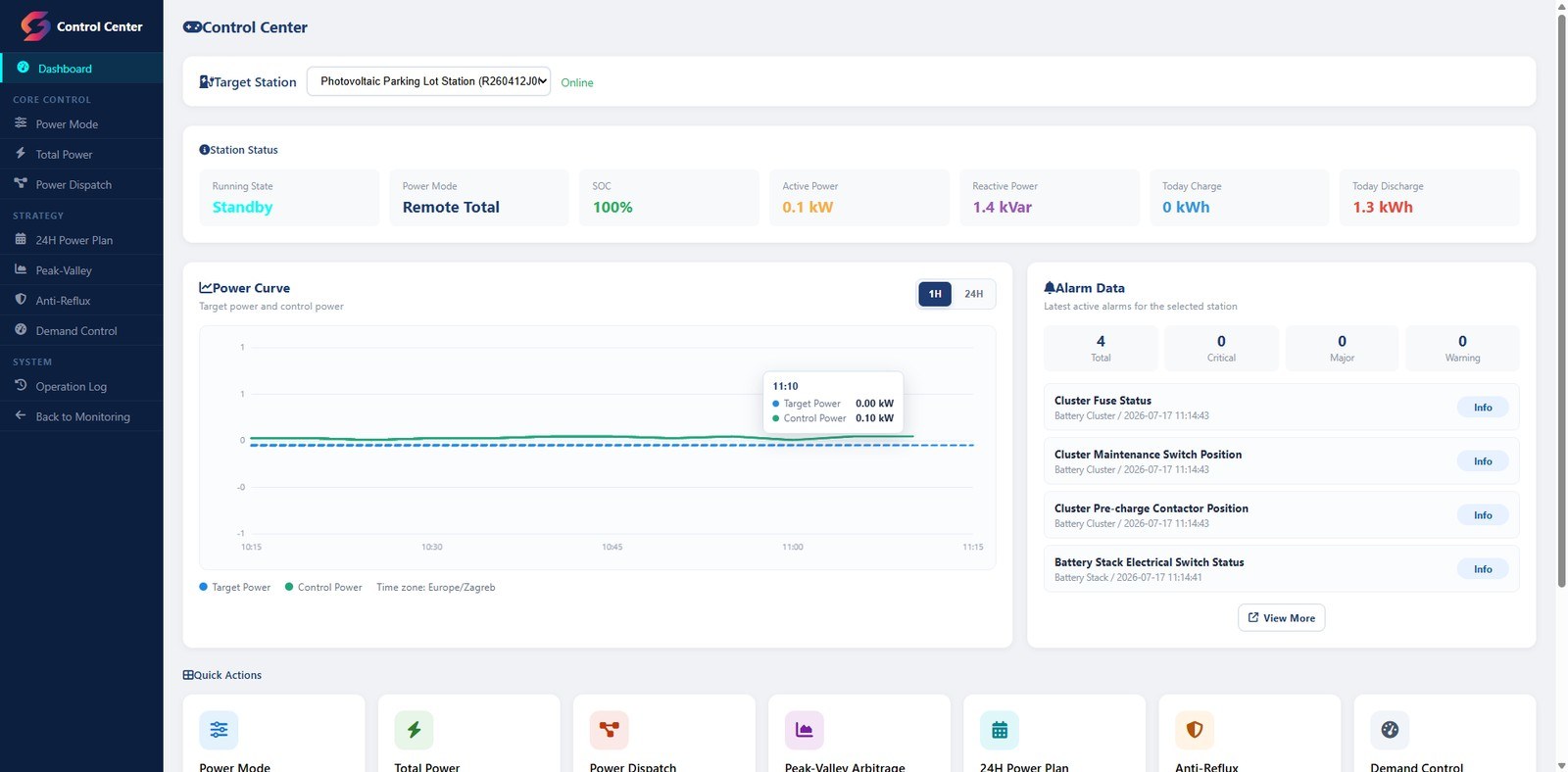
Control Center — running mode, power dispatch, peak-valley arbitrage, anti-reflux and demand control. This is the operations tier: our team works here, the owner does not have to.
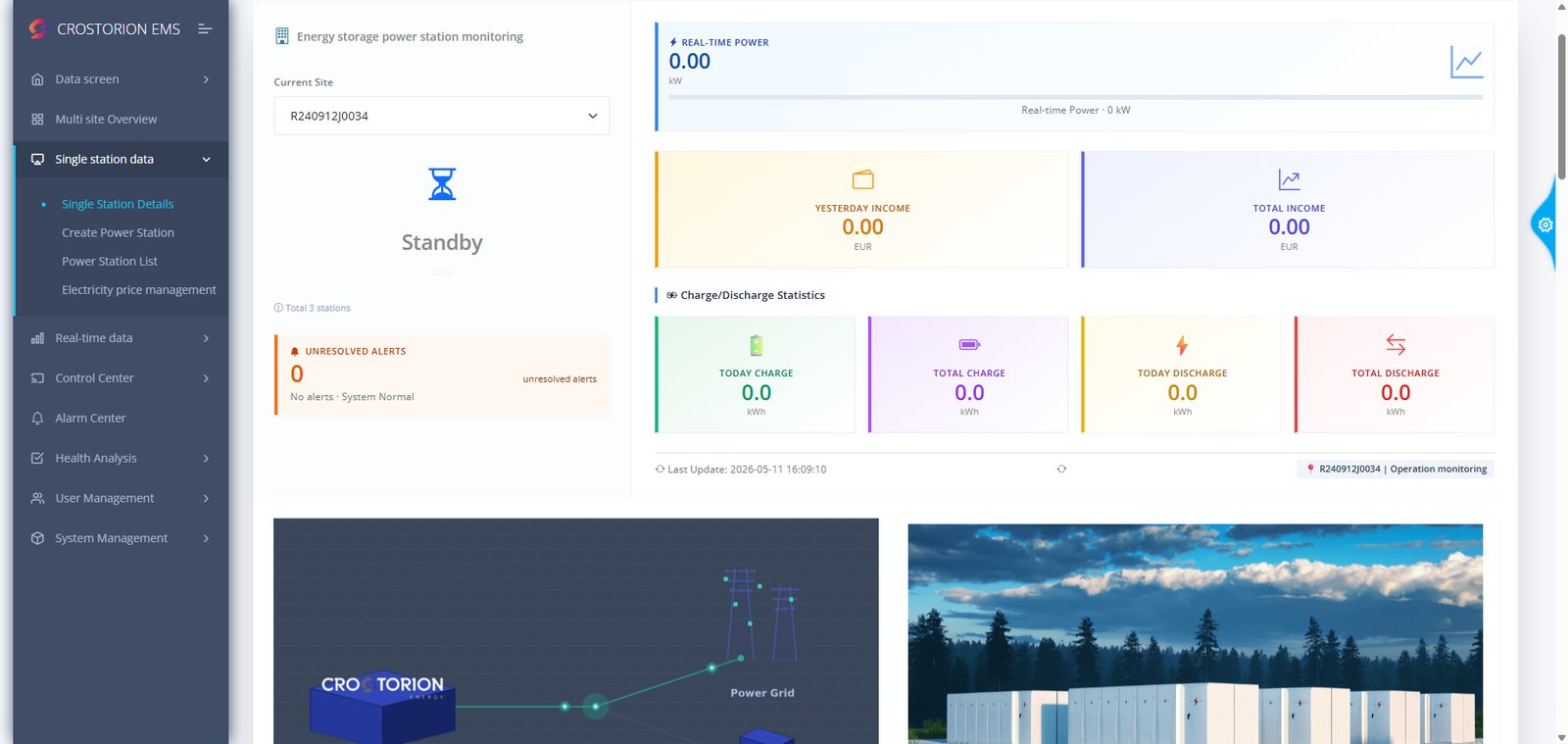
The owner's view — real-time power, income today and cumulative, charge and discharge, and whether anything is unresolved
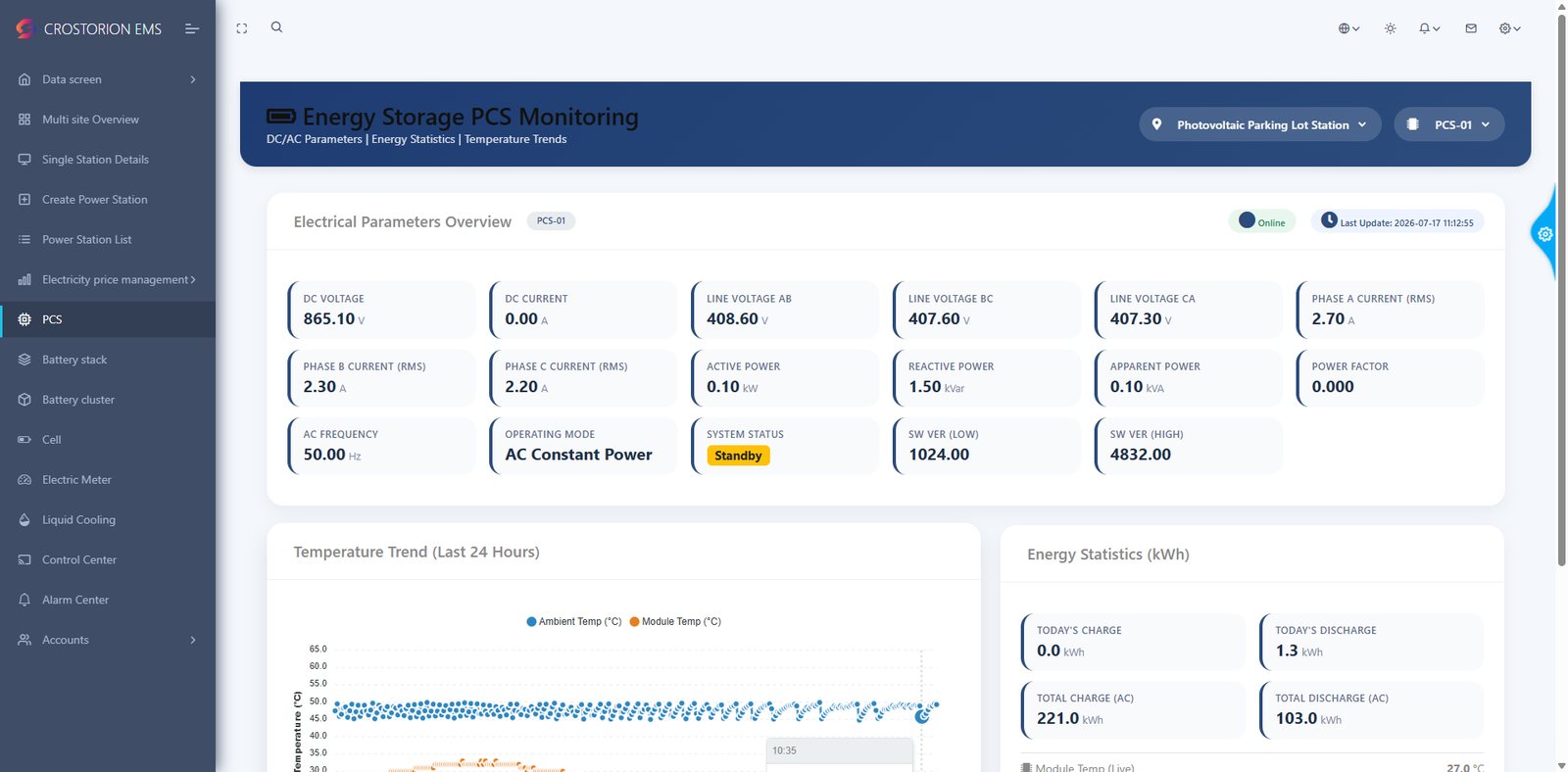
PCS monitoring — the electrical parameters of the conversion system, per unit, with the temperature trend
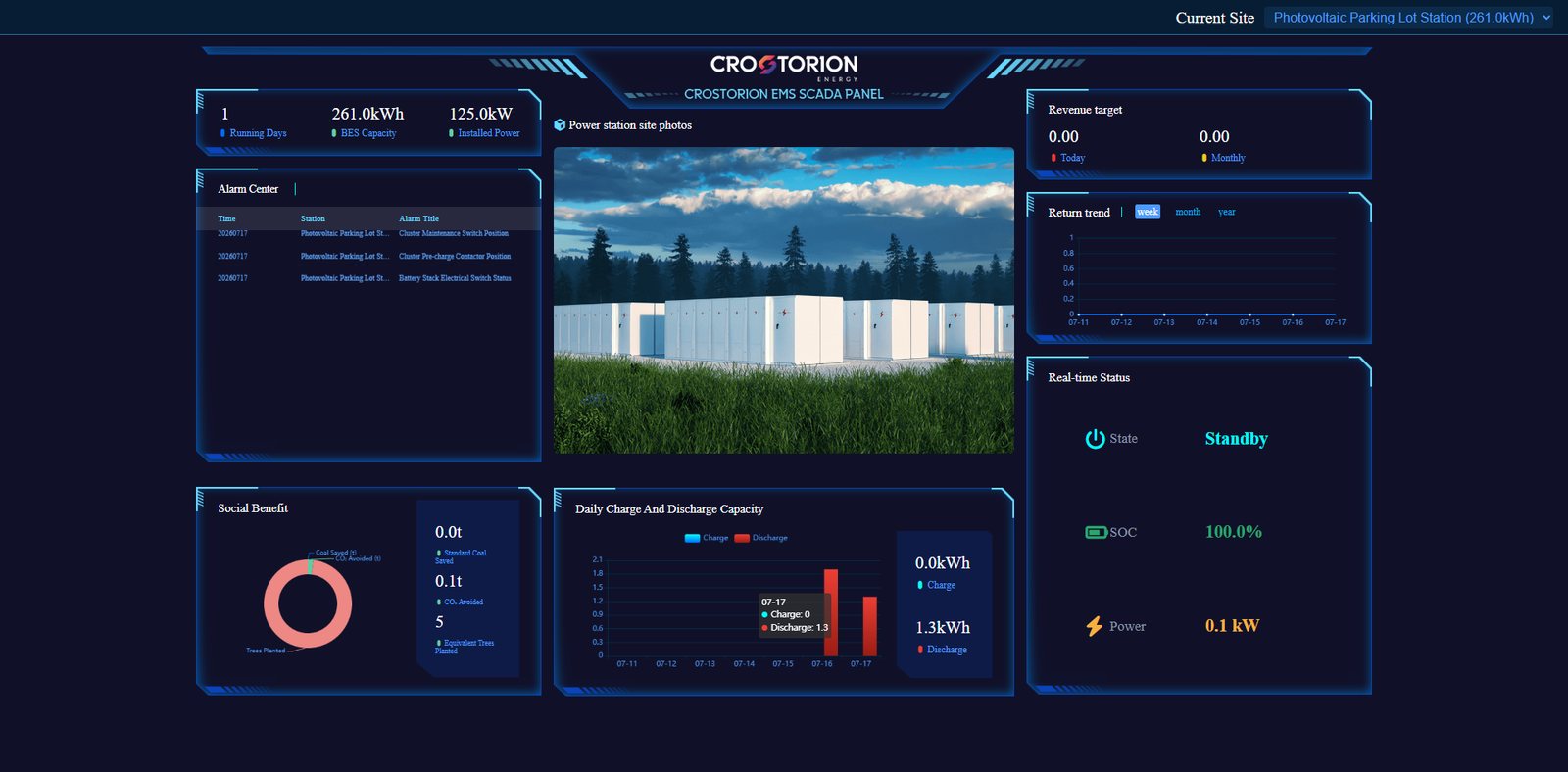
The SCADA panel for a single 261 kWh site — running days, capacity, alarms, daily charge and discharge, and live state of charge
Start your own project
Tell us about your project and we'll size a system and reply within two business days.